Shipped today
Building muscle 101 - How does it work and why is protein important?
- By Patrick McCarthy (MSc)
- Mar 13, 2021


Have you had trouble gaining lean muscle?
You may have already attempted the holy triad including religiously lifting weights, taking whey protein and eating 5+ meals a day, only to come up short.
Hopefully, I can help clear up and demystify some of the confusion around this area for you.
What is muscle tissue?
Muscle is a metabolically active tissue that we need for all function and movement. When I say function, I mean organ and digestive function because our heart and intestines are quite literally made of muscle!
For movement, muscle contracts and relaxes, shortens and lengthens which allows us to move out limbs, lift things, run, jump, kick along with all the other fundamental movement skills.
The importance of muscle building for your health
Muscle is often overlooked as a crucial indicator of health. It is in fact one of the most important aspects of our long-term health, and by maintaining it, we can:
- Improve insulin sensitivity
- Improve strength
- Reduce injury
- Reduce the risks of falls in old age
- Reduce the risk of hip fractures
- Reduce the risk of arthritis

How do I build muscle?
The first thing to understand here is that building muscle is a slow process. Some individuals will find it easier to accrue muscle, but still, it won’t be anything close to the time required to gain the same weight in fat tissue.
With that said, here are 5 of the non-negotiables for building muscle
1. Caloric Surplus
In order for you to quite literally synthesise new tissue, your body will require more energy than it expends on daily basis. When you achieve this desired state, known as an energy surplus, your body will store the excess energy. Some of this will be as fat, and if you are regularly training, some will be as muscle tissue.
Many individuals, especially of the younger variety, will look straight to protein supplements, nutritional mass gainers, etc. without ensuring that they are taking care of the crucial component, energy balance.
2. Protein Intake
Have you heard that protein is bad for you? Too much protein can damage your kidneys? These are myths that were perpetuated from small, poorly controlled studies that have since been completely refuted by a large body of research.
Why are proteins essential for muscle building?
Protein is actually essential for a variety of reasons, namely being incorporated into new tissue, such as muscle. Protein is broken down into amino acids, which are the building blocks of our muscle. However, muscle is constantly turning over - which simply means it is constantly being broken down and built back up.
The building part of this equation depends heavily on two factors - protein intake and a stimulus (resistance training - we’ll cover this in a little bit).
How many grams of protein is needed?
For protein, you should aim to consume between 0.8 - 1.6 g/kg of your bodyweight. It will generally equate to 15-35% of your total energy intake. However, you should always calculate it based on your individual weight, as different body sizes require very different protein intakes.
IMPORTANT: If you are overweight or obese, you should base your protein intake off your ideal weight, which should be within the “healthy” range on the BMI scale e.g. 18.5 - 24.9.
Whey Protein | Vegan Protein | Casein | Collagen

3. The Stimulus - Resistance Training
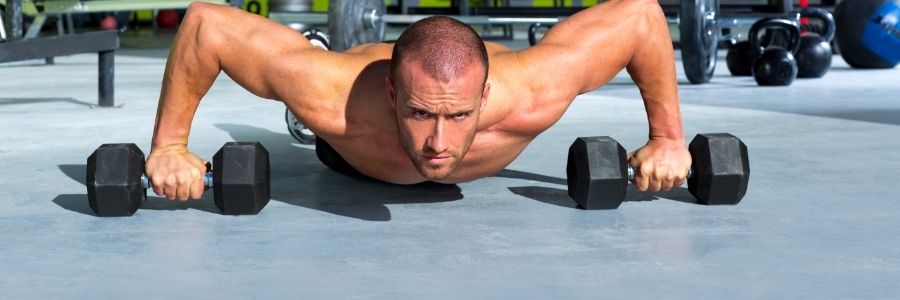
Resistance, or strength, training is a crucial part of lean muscle gain. It is the action that breaks down, and tears muscle fibres but also will ignite the muscle building process, known as muscle protein synthesis.
Strength training combined with sufficient protein intake
Resistance training alone, without sufficient protein intake, will of course provide some size and strength adaptations. However, these won’t compare to the ‘gainz’ you will make when you combine it with optimal protein intakes, I can personally assure you.
Train progressively
I recently spoke with a widely-known expert in the area of performance nutrition and they told me that you NEED to be progressive with your training. An unorganised gym programme will result in inconsistent stimuli placed on the muscle and inconsistent gains!
FUN FACT: When we progressively train, our muscle fibres are sprained and ruptured, which results in hypertrophy (increased size) and hyperplasia (formation of new fibres). This culminates in bigger muscles!

4. The importance of sleep in muscle building
Sleep is one of the most overlooked factors that has the power to completely overhaul or tear down your training. And because your training will dictate your intensity, duration and overall quality of the force placed on the muscle - sleep is crucial for muscle gain.
Also, there are several studies to show that insufficient sleep can lead to impaired muscle function the day after. You should aim for between 7 - 9 hours of sleep every night for optimal recovery and adaptations.
Avoid sleep deprivation if you want to build muscle
Many people reading this might have the goal of building muscle while losing fat. If this is you, than you will need to adopt a slight Caloric deficit, alongside a high-intake of protein. There was a study which showed that when individuals in a caloric deficit only had 5 hours of sleep for two weeks, 60% of the weight loss was as muscle.
When they did the same diet, from the same starting weight, several months later, the only difference was that they had 8 hours of sleep. In this condition, they held on to a lot more Building muscle 101 - How does it work and why is protein importan, and lost a large portion of the weight as fat.

5. Should I use supplements for muscle building?
If you have been following along with my articles, you’ll know I am not just here to push supplements! However, when trying to accrue muscle, there are some that can definitely help to expedite the process!
Whey protein for muscle building
First off, supplementing with whey protein can be a great option for those that find it difficult to hit their daily intake goals for the nutrient. Whey is one of the highest quality sources of protein due to its amino acids profile and digestibility rating!
If you want to learn more about this supplement, read my recent article all about it!
Creatine for muscle building
Next is creatine, which is NOT a drug or steroid. Creatine is a completely natural compound that is formed in the body, and is also present in animal meat and dairy. However, while we generally get 1-2 grams of creatine through natural sources daily, there is evidence to show that more (5 - 10g) can provide a range of benefits.
We have high-quality creatine monohydrate powder here!
Omega 3 for muscle building
Omega 3 fatty acids are a forgotten nutrient in those that do not consume fish products 3-4 times per week. Omega 3 are one type of fatty acid that play, among other roles, an anti-inflammatory role in the body.
When we train, we increase inflammation in the muscle and the concentration of free radicals increase. While some inflammation is important, if it is excessive, it will dampen our potential gains and impair future training sessions.
To get these, you can take fish oil, or if you are vegan of a vegetarian, algae oil.

Important takeaways
- To build muscle you need to combine a high-protein diet with a stimulus through progressive strength training.
- To create new tissue, you will need an energy surplus and so energy intake will need to adapted.
- Don’t overlook the value of sleep, it is invaluable for optimal training, adaptation and recovery.
- Whey, creatine and omega-3 fatty acids can be highly effective for increasing Building muscle 101 - How does it work and why is protein importan.
- Creatine is not a drug! It is a natural compound formed in the body.